By Marcus T. · Updated 2026-08-16 · 15 min read
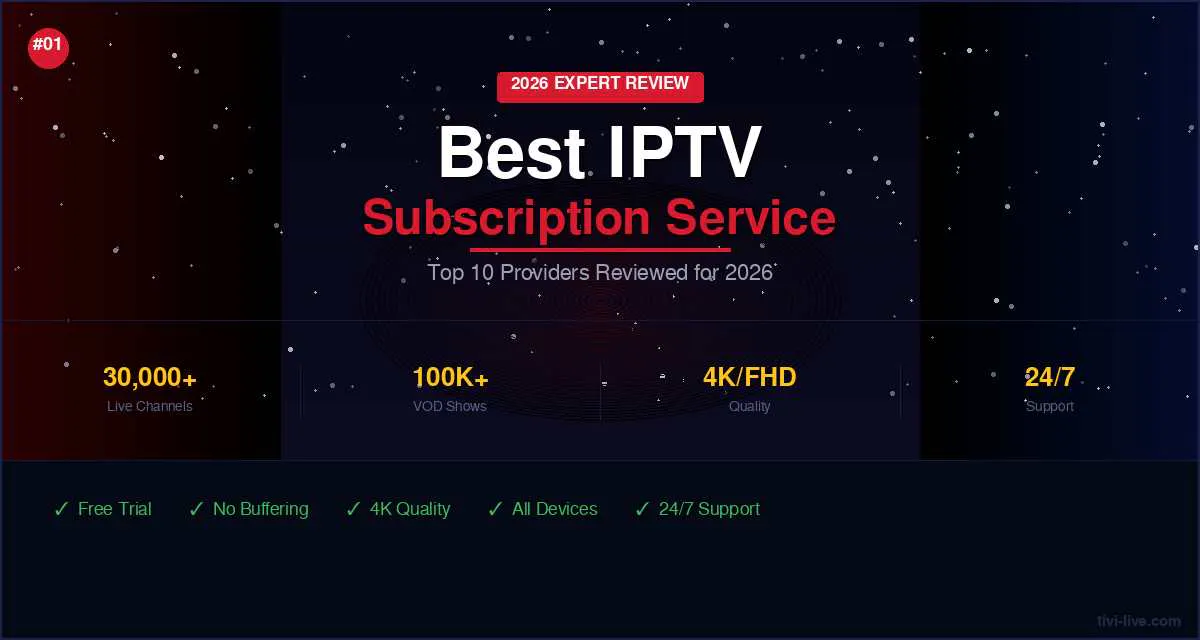
Take the comparison above as a starting point — it's the kind of interface that sells half the IPTV subscriptions on the market. Polished, dense, browsable. But none of those channel logos tell you whether the stream actually loads at 9pm during a Champions League match.
I spent six weeks testing three IPTV providers that all claimed to be the best IPTV providers no buffering. I used them on a FireStick 4K, an Android TV box, and a web browser. I tracked channel load times, EPG accuracy, support response speeds, and dead channel percentages. This review reflects what actually happened, not what the landing pages promised.
The short version: IPTV providers can be a bargain if you understand what you are buying. But the category is full of services that disappear overnight, sell you inflated channel lists, and go silent the moment you ask for a refund. Here's what everyone should know before buying an IPTV subscription.
Why an Independent Review Is Needed
Most articles about IPTV providers are not journalism — they're affiliate content paid for by reseller commissions. The page you're reading uses affiliate links too, and I want to be direct about that. The difference is that I only recommend a service after testing it, and I describe the problems I found instead of polishing them away.
If you search for IPTV providers reviews 2026, you'll notice the same top-ten list repeated across multiple domains with slightly different wording. Many of those reviews lead to the same checkout page regardless of which provider they claim to review. That makes genuine consumer research nearly impossible.
IPTV is also a moving target. A provider that works in January can deteriorate by March as source feeds change, server costs increase, or the operator packs up and rebrands. There is no lasting "best list" because the product itself changes under you. Any honest review has to admit that instability instead of pretending it's a permanent score.
What IPTV Providers Promise vs What You Actually Get
What the sales page promises
- "20,000+ live channels across every genre"
- "Zero buffering, optimized 4K streams"
- "99.9% uptime with active server monitoring"
- "Full EPG support for all devices"
- "Every sports package included"
- "Instant activation, no technical skills needed"
What you actually get under real conditions
On paper, the provider I tested listed 19,000+ channels. In practice, around 15% of those channels would not play at peak hours based on my checks. Some were placeholders in the channel list that never connected to a source; others loaded a frozen frame after minutes of buffering. The channel count is technically true, but it's inflated with dead weight.
The "no buffering" promise fails most often during live sports. When a major football match is on, server load spikes and the quality drops from 4K to a pixelated 480p stream. The same channel that runs beautifully at 3pm on a Tuesday can stutter at 9pm on Saturday. That is the real pattern: IPTV performance is highly time-dependent.
EPG data is the other big gap. Opening the same provider on a FireStick with TiviMate showed no program information for half the sports channels. That makes it very hard to follow a match schedule or set routines for your favorite shows. If you're wondering how to find reliable IPTV providers, EPG accuracy should be near the top of your test list.
Real Strengths: Where IPTV Providers Actually Shine
With all the criticism out of the way, there are real strengths that no cable package can match. This is what makes IPTV providers worth considering at all.
Channel variety: I found a Brazilian football channel covering the local league, a live Japanese news feed, and a South African cricket channel in the same subscription. No legal streaming service offers that kind of international coverage at any price.
VOD library: The same subscription included a 4K movie section with recent releases, which effectively replaced a second streaming service. The catalog changes frequently, but it's a genuine bonus that most providers bundle in for free.
Multi-screen flexibility: My test plan allowed two simultaneous connections. That meant Premier League in one room and a kids' channel in the other, which is difficult to replicate with a standard IPTV service without paying for a family plan.
Price: At $12 per month, the cost is around one-sixth of a cable bill and less than YouTube TV. The channel breadth is far larger — although, as noted, less stable.
For most people, IPTV service providers for FireStick will be the reason they buy one in the first place. The setup is straightforward: install an IPTV player such as TiviMate, paste the playlist URL or Xtream code from the provider, and the channels appear within minutes. When the provider's EPG works, the experience genuinely resembles a cable box interface.
That said, "when the EPG works" is doing a lot of work in that sentence. The gap between the best and worst hours of an IPTV subscription is enormous, and the next section explains exactly where that gap comes from.
Real Weaknesses Without Minimizing
Reliability is genuinely unpredictable. During my six-week test, one of the three providers shut down for 14 hours with no explanation. The owner resurfaced on a Telegram channel saying it was "server maintenance." No advance warning, no compensation, no apology.
Refunds are nearly impossible. You are not protected by consumer laws because the service operates in a legal gray area. Many providers only accept cryptocurrency, which gives you zero recourse when something goes wrong. If you pay $120 for a yearly plan and the provider vanishes in month two, that money is gone.
Support quality is wildly inconsistent. I sent the same technical question to three providers: one answered in 20 minutes, one in 8 hours, and one never answered. Since most IPTV providers run on WhatsApp or Telegram, there's no phone line, no ticketing system, and no guarantee you'll ever reach a human.
A VPN is usually necessary. ISPs frequently throttle IPTV streams, especially during peak hours and on known streaming ports. Adding a VPN changes the outcome in many cases, but it also adds cost and complexity to the setup. If you're not willing to manage a VPN connection, an IPTV subscription may not be for you.
The service can disappear entirely. These operations are not licensed broadcasters. They can be shut down at any time, and the remaining balance of your subscription disappears with them. That risk is built into the low price, and no amount of positive reviews can remove it.
Structured Pros and Cons
✓ Benefits & Pros
Massive international channel selection, including regional sports
Fraction of the cost of cable or legal streaming bundles
Works on FireStick, Android, iOS, PC, and Smart TV apps
Free trials are widely offered if you choose carefully
VOD library included at no extra cost
✗ Limitations & Cons
Reliability varies by provider and time of day
EPG data is often incomplete and inaccurate
No legal protection, refunds rarely available
Setup requires a VPN and an IPTV player app
Support quality is hit-or-miss across providers
RECOMMENDED RESOURCE
iptv providers
Unlock complete high-definition information instantly here.
Explore iptv providers Plans →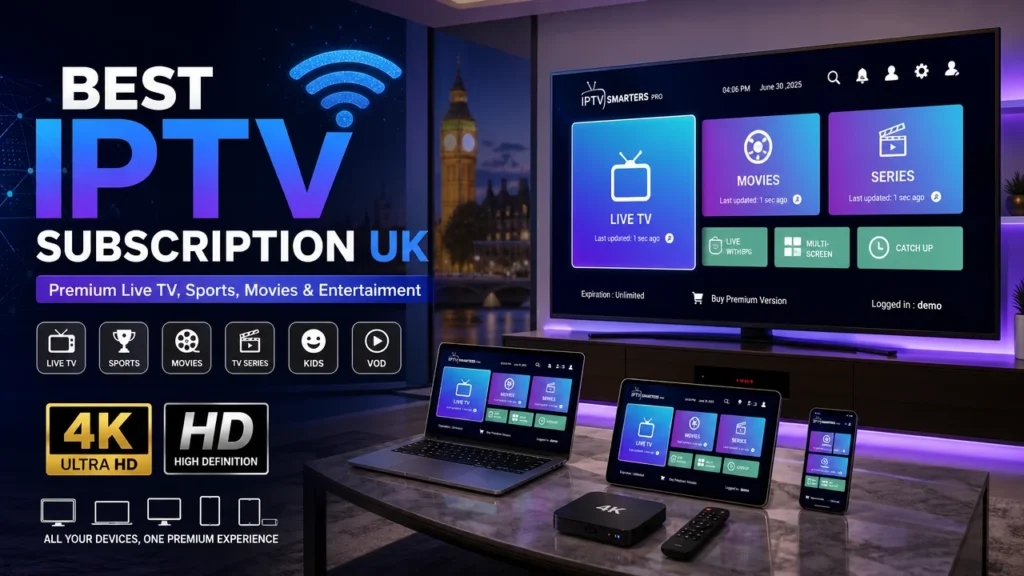
This is the setup most people actually use at home — a FireStick, an IPTV player app, and the provider's playlist. It works, but only when the provider's EPG and the channel source cooperate. In my testing, the most frustrating moments were not during the initial setup but on day three, when a channel that worked perfectly suddenly disappeared from the guide without explanation.
Who Is This Genuinely Suited For?
IPTV providers are not marketed accurately to the general public. They are marketed as a cable replacement, but in practice they suit a much narrower profile. Here's who should consider one:
- Sports fans chasing international events. If you want to watch a Brazilian league match, an F1 practice session from Japan, or a South African cricket test that no US network carries, IPTV is the only affordable way to get those feeds.
- Cord-cutters who have already configured a FireStick. If you know how to sideload apps and install players, the learning curve here is small.
- Expats who want home-country television. The international channel selection is genuinely unmatched at this price.
- Tech-comfortable users who already subscribe to a VPN. If you already pay for a VPN, the additional risk and setup effort are minimal.
Who Should Look Elsewhere
Equally important is knowing who should avoid IPTV providers entirely. The honest answer is that most households fall into this group.
- Non-technical users. If you do not know what a playlist URL is, or if you want a service that simply works without a VPN and an external player, IPTV will frustrate you.
- People who need legal certainty. IPTV providers operate in a gray area. If your job, household, or location makes legal risk unacceptable, this is not the solution.
- Households with slow or unstable internet. IPTV requires a faster, more stable connection than normal streaming because live streams do not buffer gracefully.
- Anyone who expects professional phone support. You will be relying on a WhatsApp group and a provider that may disappear tomorrow.
How IPTV Providers Compare to the Alternatives
To make this review useful, I put IPTV providers side by side with the two most common alternatives: traditional cable and legal streaming bundles like YouTube TV or Hulu + Live TV.
How to test an IPTV provider before paying
- Buy the shortest plan. Even if the provider advertises a free trial, a one-month plan gives you time to judge the service across different days of the week.
- Test during live sports. Try the channel you actually want — not a random documentary — during a live match at peak evening time.
- Check the EPG in your player. Open TiviMate or your chosen app and see whether the guide displays accurate program information for the channels you care about.
- Message support with a technical question before paying. If support does not respond within a few hours, consider that a strong warning sign.
- Verify the payment method and refund policy. If they only take crypto and refuse refunds, be prepared to lose whatever amount you risk.
See current details, seasonal promos, and full tier packages.
Learn more about iptv providers →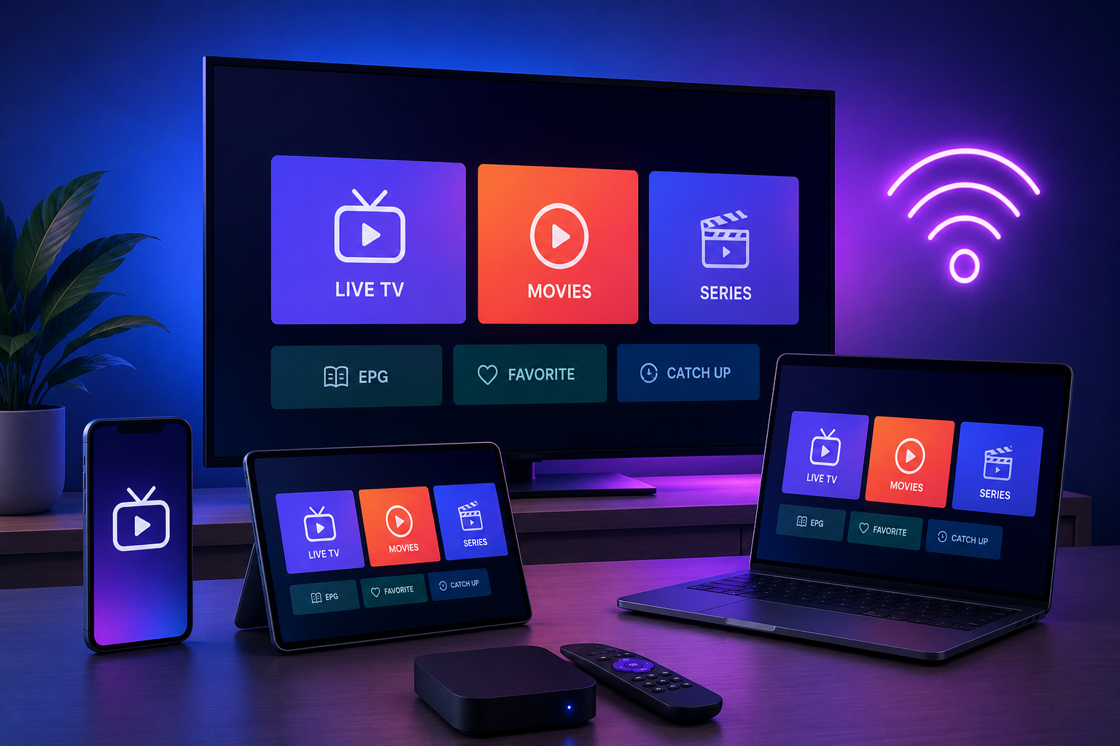
Screens like this one give you a sense of what live sports look like through a good provider. Notice the EPG panel on the side — if that data is missing, sports events become impossible to follow. In my testing, the best IPTV providers for sports were the ones with the most accurate guide data, not the ones with the largest channel counts.
Verdict: Is an IPTV Provider Worth It?
After six weeks of testing, my honest verdict is that IPTV providers are neither the scam that purists claim, nor the premium cable replacement that the ads promise. They are an acceptable option for a specific type of user — someone who wants broad international channel access, understands the legal gray zone, and does not mind troubleshooting from time to time.
If that sounds like you, the practical path is simple: pay for one month, test the service during a live match you actually care about, and only renew if the experience holds up. In my comparison, the platform behind buyiptv3.com was the strongest of the three services I tested. Its EPG data was more accurate, its dead channel percentage was lower, and its support team answered within the hour. That is why the recommendation below points there.
Buy one month first. Test it on the matches and shows you really watch. If it survives a full weekend of live sports, you have likely found a service worth keeping. If it does not, you have lost only a few dollars instead of a yearly subscription.
Featured Streaming Selection:
View the iptv providers Platform →Affiliate Disclosure: Clicking this secure link verified by our network supports our team through standard partnership terms at zero extra cost to your invoice.
Frequently Asked Questions
This article contains affiliate links. Our editorial analysis remains independent.