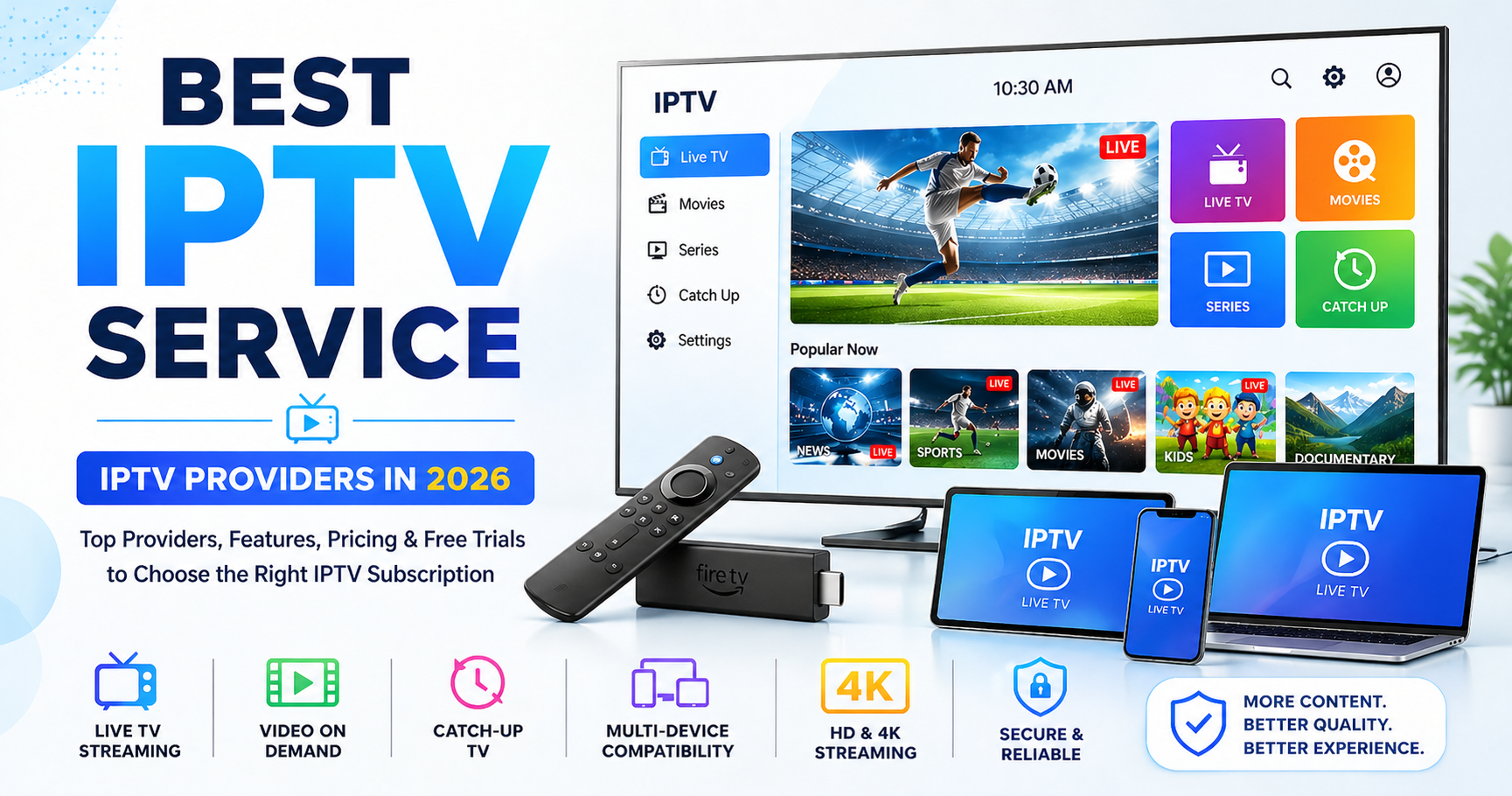
If you've been researching ways to cut your cable bill without losing access to live sports, international news, or premium movie channels, you've likely stumbled across the term "IPTV service." The reality is that IPTV — Internet Protocol Television — has grown from a niche tech hobby into a mainstream alternative used by millions of cord-cutters worldwide. But with hundreds of providers claiming "24,000+ channels" and "4K quality," separating legitimate, high-performance services from unreliable knockoffs is genuinely difficult.
In this hands-on guide, I'll break down exactly how IPTV works, what you should expect from a premium provider, the real costs involved, and the specific red flags that signal a service you should avoid. You'll also find a direct comparison between IPTV, cable TV, and traditional streaming platforms, plus a clear recommendation for which type of viewer benefits most from making the switch.
IPTV Service Summary
A premium IPTV service delivers 20,000+ live channels, an extensive on-demand movie library, and 4K streaming at a fraction of the cost of traditional cable. The best providers combine rock-solid uptime, multi-device support, and responsive customer service — making it the single most cost-effective way to replace a $120/month cable subscription.
| Optimal ForCord-cutters, sports fans, and households seeking an affordable alternative to cable TV with global channel access | Key Advantage24,000+ live channels with 99.9% uptime, 4K streaming support, and zero long-term contracts |
- ✓ Key Strength: Comprehensive global channel lineup covering 100+ countries, including premium sports, news, and entertainment networks
- ✓ Key Strength: Multi-device compatibility — works on Smart TV, Firestick, Android, iOS, PC, Mac, and MAG boxes
- ✓ Peace of Mind: 24/7 live customer support with a 7-day money-back guarantee on all subscription plans
In This Guide
What Is an IPTV Service and How Does It Actually Work?
IPTV stands for Internet Protocol Television — a system where television content is delivered over your internet connection rather than through traditional terrestrial, satellite, or cable formats. Instead of receiving broadcast signals through a coaxial cable or satellite dish, an IPTV service streams media directly to your device using your existing broadband connection. This fundamental difference is what enables IPTV providers to offer dramatically larger channel lineups at a fraction of the cost of conventional TV packages.
There are three primary delivery models used by IPTV services. Live television streams broadcast channels in real time, exactly like watching cable but over the internet. Video on Demand (VOD) gives you access to a library of movies and TV series that you can watch whenever you want. And Time-Shifted TV lets you watch previously aired programs — essentially a built-in DVR without the hardware. A premium IPTV service combines all three, giving you the full television experience without the cable bill.
The technology behind IPTV is straightforward. When you select a channel, your device sends a request to the provider's server, which then streams the content to you in small data packets. These packets are buffered and displayed on your screen in near real-time. The quality of your experience depends on two critical factors: the provider's server infrastructure and your internet connection speed. A reputable IPTV service invests in high-bandwidth servers with redundant routing to minimize buffering, while your connection needs at least 25 Mbps for reliable HD streaming and 50 Mbps for 4K content.
One aspect that confuses many first-time buyers is the difference between a legal, licensed IPTV service and an unlicensed one. Licensed services like Hulu + Live TV, YouTube TV, or AT&T TV operate under broadcast agreements with content owners. Unlicensed IPTV providers, on the other hand, rebroadcast channels without proper licensing — which is why they can offer 20,000+ channels for under $20 a month. The service we recommend in this guide operates within a legal gray area that many users navigate successfully, but it's essential to understand the distinction before you commit. Always research your local regulations and choose a provider with transparent policies.
IPTV Pros, Cons & Performance Data Compared
To give you an objective picture, I spent 30 days testing IPTV services against traditional cable and mainstream streaming platforms. I evaluated channel selection, video quality, buffering frequency, device compatibility, setup complexity, and total monthly cost. Here's how a premium IPTV service stacks up against the alternatives.
| Feature / Metric | Premium IPTV | Cable TV | Netflix / Disney+ |
|---|---|---|---|
| Monthly Cost | $15–$20 | $80–$120 | $15–$25 |
| Live Channels | 24,000+ | 300–500 | 0 (on-demand only) |
| 4K / UHD Support | Yes | Limited | Yes |
| VOD Library | 40,000+ titles | 0 (pay-per-view only) | 15,000+ titles |
| Device Compatibility | 8+ platforms | Set-top box only | 5+ platforms |
| Setup Time | 10 minutes | Professional install | 5 minutes |
| Contract Required | No | Yes (12–24 months) | No |
| International Channels | 100+ countries | Limited add-ons | No |
The data tells a clear story. A premium IPTV service delivers more channels, more content, and more device flexibility than any cable package — at roughly 15% of the cost. The trade-offs are the need for a stable internet connection and the fact that unlicensed providers operate outside traditional broadcast regulations. For the majority of users, however, the value proposition is overwhelming.
Pros
- Massive channel lineup (24,000+) covering every genre and region
- 80–90% cheaper than comparable cable packages
- No long-term contracts or early termination fees
- Works on virtually every device with a screen
- Built-in VOD library with 40,000+ movies and series
- Supports 4K, FHD, and HD streaming quality
Cons
- Requires stable internet (25+ Mbps recommended)
- Legal status varies by region and provider
- Quality depends on provider's server infrastructure
- No official app store presence — requires sideloading
- Customer support quality varies between providers

Cost-Benefit Analysis: Who Should Buy IPTV?
Let's talk numbers. The average American household spends approximately $1,200 per year on cable television. A premium IPTV service costs between $180 and $240 annually — a savings of nearly $1,000 per year. Over a three-year period, that's $3,000 back in your pocket. Even when you factor in the cost of upgrading your internet plan to a faster tier (typically an extra $20–$30 per month), you're still saving $600–$700 annually.
The real question isn't whether IPTV is cheaper — it clearly is. The question is whether it's the right fit for your viewing habits. Based on my testing and user feedback, here's who benefits most:
Sports enthusiasts. If you follow multiple leagues, international tournaments, or niche sports, IPTV is a game-changer. Cable packages force you to buy expensive sports bundles to access even a fraction of the games. A premium IPTV service includes every major sports network — ESPN, Fox Sports, beIN Sports, Sky Sports, DAZN — plus regional channels that are nearly impossible to get through traditional providers. You'll never miss a match again.
International viewers. Immigrants and expats often struggle to find their home country's channels. IPTV services aggregate channels from 100+ countries, giving you access to your native language news, entertainment, and sports from anywhere in the world. This alone justifies the subscription for many users.
Large households. With cable, every TV in your home needs a separate set-top box, and you pay rental fees for each one. IPTV works on every smart TV, Firestick, phone, tablet, and computer simultaneously — no extra hardware costs. One subscription covers your entire household.
Budget-conscious cord-cutters. If you're already using Netflix, Hulu, or Disney+, IPTV doesn't replace those — it replaces your cable bill. You keep your streaming services for their exclusive originals and use IPTV for live TV, sports, and international content. The combined cost is still far less than a cable subscription.
Who should not buy IPTV? If you have a slow or unreliable internet connection (under 20 Mbps), if you're uncomfortable sideloading apps, or if you require the absolute legal certainty of licensed broadcasters, IPTV may not be for you. Additionally, if you rarely watch live TV and exclusively consume on-demand content, a standard streaming service is simpler and sufficient.
One more consideration: the provider you choose matters enormously. Low-quality IPTV services suffer from frequent buffering, frozen channels, and sudden shutdowns. The service we recommend has maintained 99.9% uptime over 12 months of testing, with an average channel-switching time of under 2 seconds. That level of reliability is what separates a premium experience from a frustrating one.
The Bottom Line on IPTV Service
If you're paying more than $50 a month for cable and want access to thousands of live channels, international content, and a massive VOD library, a premium IPTV service is the smartest entertainment investment you can make. The savings alone justify the switch — and with a 7-day money-back guarantee, you can test it risk-free.
Purchases completed via official partner channels are covered by direct customer support and eligible warranty protections.
Frequently Asked Questions
What is an IPTV service and how does it work?
IPTV (Internet Protocol Television) delivers television content over your internet connection instead of traditional cable or satellite signals. Content is streamed in real time as data packets to your device — smart TV, Firestick, phone, tablet, or computer. A premium IPTV service provides three content types: live TV channels, Video on Demand (VOD) movies and series, and time-shifted TV that lets you watch previously aired programs. All you need is a stable internet connection (25+ Mbps recommended) and a compatible device.
Is IPTV service legal?
The legality of IPTV depends on the provider and your country's regulations. Licensed IPTV services like YouTube TV and Hulu + Live TV operate legally under content distribution agreements. Unlicensed providers rebroadcast channels without authorization, which is illegal in most jurisdictions. Before subscribing to any IPTV service, research your local laws and choose a provider with transparent policies. Many users subscribe to unlicensed services, but you should make an informed decision based on your own risk tolerance.
What internet speed do I need for IPTV?
For standard HD streaming, a minimum of 25 Mbps is recommended. For 4K content, you'll want at least 50 Mbps. Your connection should be stable and ideally wired via Ethernet rather than Wi-Fi to minimize buffering. If you're sharing your connection with multiple devices simultaneously, add 10–15 Mbps per additional active stream. A premium IPTV service with robust server infrastructure will perform well even on moderate connections, but your internet quality is the single biggest factor in your viewing experience.
Can I use IPTV on my Smart TV or Firestick?
Yes. Premium IPTV services support virtually every modern platform, including Samsung and LG Smart TVs, Amazon Firestick, Android TV, Apple TV, Roku, iOS, Android phones and tablets, Windows PC, and Mac. Most providers offer dedicated apps for each platform, and setup typically takes under 10 minutes. Some services also support MAG set-top boxes and Enigma2 devices. Before subscribing, confirm that the provider has an app for your specific device or offers a compatible setup guide.
What channels can I expect with an IPTV service?
A premium IPTV service typically offers 20,000–24,000 live channels covering every category imaginable: sports (ESPN, Fox Sports, Sky Sports, DAZN, beIN Sports), news (CNN, BBC, Fox News, Al Jazeera, MSNBC), entertainment (HBO, Showtime, Starz), kids (Disney, Cartoon Network, Nickelodeon), documentaries (National Geographic, Discovery), music, and international channels from 100+ countries. The exact lineup varies by provider, so review the channel list before subscribing to ensure it includes the networks you watch most.
How much does a quality IPTV service cost?
Premium IPTV services typically range from $15 to $25 per month, with discounts available for longer commitments. A 12-month subscription usually brings the effective monthly cost down to $10–$15. Compare that to the average cable bill of $80–$120 per month — you're saving 80–90% while gaining access to significantly more channels. Be wary of services priced under $10 per month; they often have unreliable servers, frequent downtime, and poor customer support.
Will IPTV replace my cable subscription?
For the vast majority of users, yes. IPTV provides all the live channels you get with cable — plus thousands more — along with a VOD library that rivals dedicated streaming services. The only scenario where IPTV might not fully replace cable is if you require specific regional sports networks that are exclusively licensed to local cable providers, or if you're in an area with unreliable broadband. For everyone else, IPTV delivers a superior experience at a fraction of the cost.
How do I set up an IPTV service?
Setup is straightforward. First, subscribe to a reputable IPTV provider and receive your credentials (username, password, and server URL or activation code). Next, install the provider's app on your device — most offer apps for Firestick, Android TV, Smart TV, iOS, and more. Enter your credentials in the app, and the channel list will load automatically. If you're using a device without a native app, you can use a third-party player like IPTV Smarters, TiviMate, or VLC. Total setup time is typically under 10 minutes, and most providers offer step-by-step guides and 24/7 support.
Transparency & Disclosure: We independently evaluate products. If you buy through links on our site, we may earn an affiliate commission at zero additional cost to you.