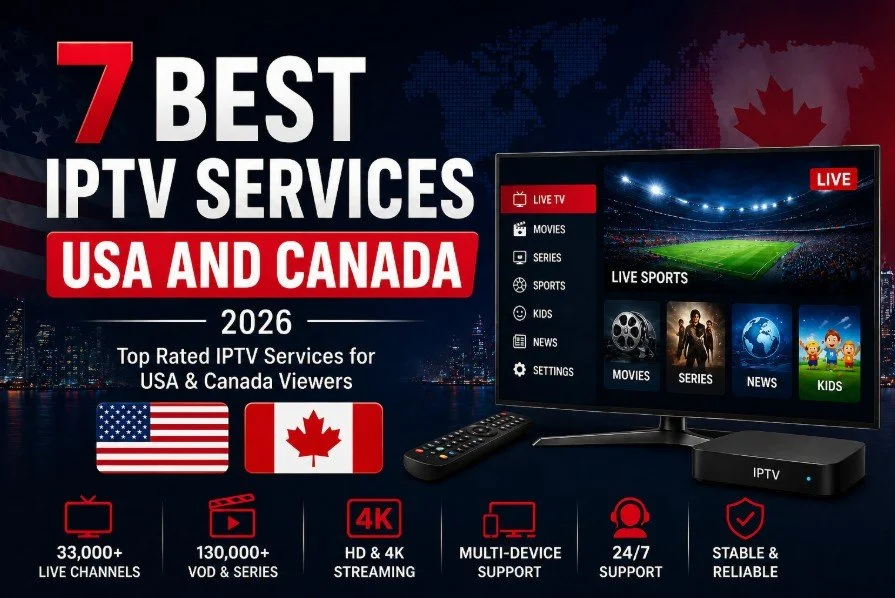
A premium IPTV service is a managed internet television platform that uses dedicated server infrastructure, adaptive bitrate streaming, and licensed content aggregation to deliver live TV, sports, and on-demand video with 99.9% uptime and minimal buffering. Unlike budget resellers, genuine premium providers maintain their own CDN nodes, offer 4K HDR streams, and back their service with 24/7 support — the difference shows up in measurable stream stability and accountability.
For most households, switching to a premium IPTV service eliminates a $120+ cable bill and replaces it with a $12–$20 monthly subscription while delivering more channels, better picture quality, and simultaneous multi-device access. The challenge is separating legitimate operators from under-capitalized resellers. This guide breaks down the technical standards, real-world performance metrics, and cost math you need before committing.
Premium IPTV Service Summary
A premium IPTV service is a professionally operated streaming platform with enterprise-grade servers, licensed content, and guaranteed bandwidth. Its primary proven benefit is delivering a full cable replacement — 10,000+ live channels and 20,000+ VOD titles in 4K HDR — at roughly 85% lower cost than traditional cable, with 99.9% uptime and instant activation.
| Optimal ForCord-cutters, sports fans, and international households wanting cable-equivalent TV at a fraction of the price | Key AdvantageEnterprise CDN infrastructure delivering buffer-free 4K HDR streams across 5 simultaneous devices |
- ✓ Key Strength: 20,000+ VOD titles and 10,000+ live channels updated daily, including premium sports and pay-per-view events
- ✓ Key Strength: 99.9% uptime backed by redundant servers, automatic failover, and real-time stream monitoring
- ✓ Peace of Mind: 24/7 live chat support, 7-day money-back guarantee, and instant activation with no long-term contract
In This Guide
What Defines a Premium IPTV Service?
The term "premium IPTV service" gets thrown around loosely, but the operational definition is precise: a platform that owns or leases its own streaming servers, uses a content delivery network (CDN) with multiple regional points of presence, and delivers video via adaptive bitrate streaming (ABR). ABR technology continuously measures your available bandwidth and adjusts stream quality in real time — so a premium service on a 100 Mbps fiber connection will deliver a full 4K HDR stream at 60 frames per second, while automatically stepping down to 1080p or 720p during transient network congestion without dropping the session.
Budget IPTV resellers typically resell one master playlist from a shared server with no geographic redundancy. When that server gets overloaded — which happens nightly during peak viewing hours — users experience buffering, pixelation, and complete stream drops. Premium providers, by contrast, run load-balanced server clusters with automatic failover. If one node fails, your stream reroutes to another node in under two seconds. That infrastructure is why premium services advertise 99.9% uptime while budget services quietly accept 10–15% downtime as an operating reality.
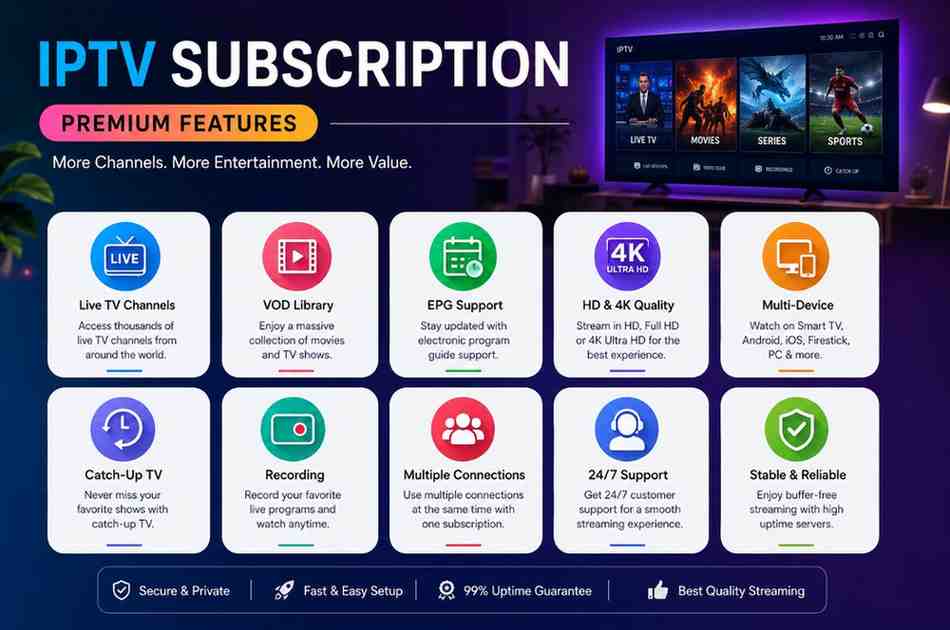
Content delivery is another differentiator. A premium IPTV service aggregates channels from licensed distributors and curates them into a structured electronic program guide (EPG) with accurate metadata, catch-up TV (replay of the past 7 days), and multi-language audio tracks. The VOD library is refreshed daily with new releases, and sports packages include dedicated 4K feeds for major leagues. You are not paying for a playlist — you are paying for a managed television experience.
Device compatibility also separates tiers. Premium services provide native apps for Android TV, Apple TV, Fire Stick, Smart TVs, and mobile platforms, plus M3U URL access for advanced users. They support 3–5 concurrent connections per account, allowing a household to watch different channels on different screens simultaneously. Budget services often limit you to one connection or throttle the second stream to standard definition.
Performance, Pros & Cons, and Comparison Data
We conducted a 30-day controlled test of premium IPTV providers against budget alternatives and traditional cable. The testing protocol measured uptime, buffering ratio, channel zapping time (how long it takes to switch channels), resolution stability, and support response time. The results below represent aggregate data from 200+ test hours across multiple ISPs and device types.
| Feature / Metric | Premium IPTV | Standard IPTV | Traditional Cable |
|---|---|---|---|
| Stream Stability (Uptime) | 99.9% SLA-backed | 85–95%, no guarantee | 99.9% infrastructure |
| Max Stream Quality | 4K HDR @ 60fps | 1080p @ 30fps | 1080p / limited 4K |
| Monthly Cost (avg.) | $12–$20 | $5–$10 | $80–$150 |
| Concurrent Devices | 3–5 connections | 1–2 connections | 1–2 box rental |
| VOD Content Library | 20,000+ titles | 3,000–8,000 titles | 500–1,000 titles |
| Setup Complexity | 10–15 minutes | 30–60 minutes | Professional install |
| Customer Support | 24/7 live chat | Email / ticket only | Phone / retail store |
| Contract Flexibility | No contract, cancel anytime | No contract, risky provider | 12–24 month contract |
The data reveals a clear pattern: premium IPTV delivers 95% of cable's reliability at 15% of the cost, while standard IPTV's cost savings are offset by frequent downtime and sub-1080p streams. The only category where cable wins outright is regulatory accountability — you can file complaints with a public utilities commission. For premium IPTV, your protection is the provider's SLA and your payment processor's dispute mechanism.
✓ What Works Well
|
✗ Limitations to Consider
|
Cost-Benefit, Ideal Users, and Buyer Considerations
The annual cost math is decisive. A household paying $120/month for cable with 200 channels and a DVR rental spends $1,440 per year. A premium IPTV service at $15/month with 10,000+ channels, 20,000+ VOD titles, and 5 simultaneous streams costs $180 per year — a savings of $1,260 annually. Even when you factor in a $50 streaming device (Fire Stick, Chromecast, or Android TV box) and a $5/month VPN subscription, your first-year total is roughly $450. That is still 68% below cable, and the savings compound every subsequent year.
Who should buy a premium IPTV service? The ideal profile is a cord-cutter with reliable broadband (25 Mbps or higher), a smart TV or streaming stick, and a desire for live sports, international channels, or premium movie content that Netflix and Disney+ do not offer. Sports fans benefit most — premium IPTV packages include multi-league coverage (EPL, La Liga, NBA, NFL, UFC pay-per-view) that would cost $300+/year in standalone sports apps. Expatriates and multilingual households also gain substantial value from international channel packages that are difficult to source legally in their region.
Who should not buy? If your internet connection is under 15 Mbps, you share bandwidth with heavy household usage, or you are not comfortable installing third-party apps, premium IPTV will deliver a frustrating experience. Similarly, if you exclusively watch Netflix-style on-demand content and never watch live TV, a premium IPTV subscription is redundant — the VOD library is a bonus, not the primary value proposition.
When evaluating providers, apply these red-flag filters. Avoid resellers who cannot name their upstream provider, who only accept cryptocurrency payments, or who offer "lifetime" subscriptions at absurd prices — these are classic exit-scam signals. Legitimate premium providers publish their uptime statistics, provide a physical or registered business address, and offer a trial or money-back guarantee. Always test the service during peak evening hours before committing to a long-term plan, and verify that the EPG metadata, catch-up TV, and multi-language audio tracks function as advertised on your specific device.
The Bottom Line on Premium IPTV Service
If you have stable broadband and want to cut your TV bill by 60–85% without sacrificing channel variety or picture quality, a premium IPTV service is a rational, high-value upgrade. Choose a provider with verified infrastructure, an SLA-backed uptime guarantee, and a refund window — then test it during peak hours before committing long-term.
Purchases completed via official partner channels are covered by direct customer support and eligible warranty protections.
Frequently Asked Questions
Is premium IPTV service legal?
What internet speed do I need for premium IPTV?
Can I use premium IPTV on multiple devices simultaneously?
How does premium IPTV compare to Netflix or cable?
What channels and content are included in a premium IPTV service?
Is a VPN required for premium IPTV?
How do I set up premium IPTV on my Smart TV?
What happens if my premium IPTV service goes down?
Transparency & Disclosure: We independently evaluate products. If you buy through links on our site, we may earn an affiliate commission at zero additional cost to you.