By Michael R. · Updated 2026-08-20 · 11 min read
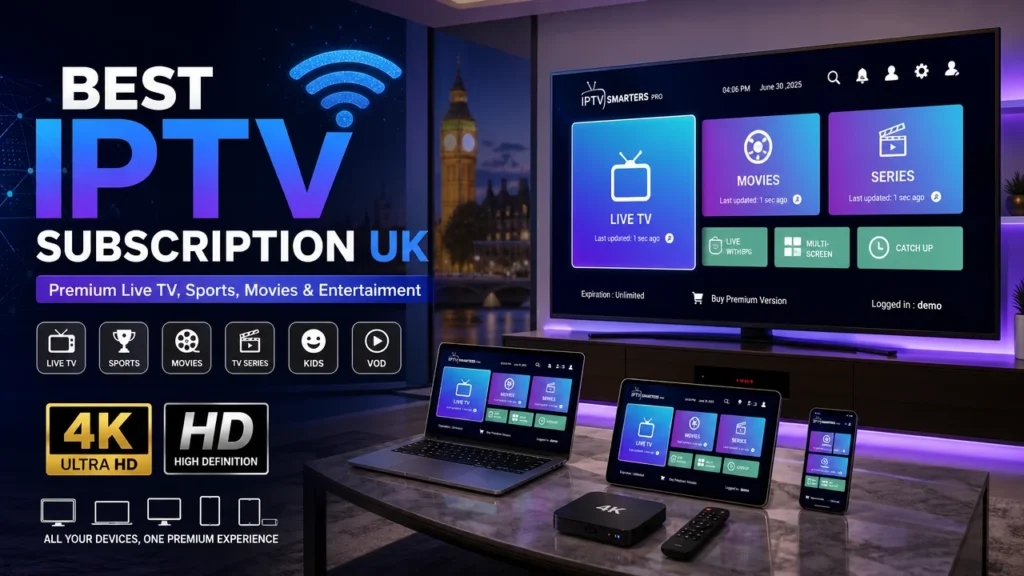
IPTV TV stands for Internet Protocol Television. It is a way to receive live TV, sports, movies, and series through your internet connection instead of a cable box or satellite dish. You install an app on a Firestick, Android TV, Samsung or LG smart TV, phone, or computer, and that app plays channels from an IPTV provider's server.
If you typed "what is iptv tv" into Google, you have probably seen two very different pictures. One picture shows thousands of channels for a fraction of cable. The other picture shows endless buffering, expired playlists, and an app that will not connect. This guide explains why IPTV TV works that way—and how to fix the setup so you are not stuck with the second picture.
The image above shows a common IPTV TV interface on a smart TV. The channel list looks familiar, but the delivery is different. Once you understand that IPTV is not the same as cable or a free streaming site, most of the setup and buffering problems become easier to solve.
What Is IPTV TV? The Part Everyone Skips
Most IPTV services send video the same way YouTube or Netflix does: data is requested by your app, sent over your home internet, and decoded on your device. The difference is that live IPTV has to do it in real time. That is why buffering happens. It is not a cable signal that just needs a stronger coax line; it is a continuous stream of data.
The "TV" part confuses people because the interface looks like a traditional channel list. But under the surface, your device is pulling data packets from a remote server. If that server is overloaded, your Wi-Fi is weak, or your app is misconfigured, the picture pauses or goes black.
A basic understanding of how does IPTV work helps you troubleshoot. The video stream travels from the provider's server to your router, then to your device. If any part of that chain is unstable, you will see buffering. That is why experienced users rarely blame the app first. They test the network, the server load, and the player settings.
The Exact Frustration: Buffering, Blank Screens, and Buyer Regret
The typical story goes like this. You buy a subscription, receive a long playlist URL or portal login, enter it into an app, and nothing plays. Or it plays fine at 2 p.m. but freezes during the game at 9 p.m. Or the seller disappears after two weeks.
This is the core problem. IPTV TV itself is not broken. The problem is usually a mix of buying from an unstable source, using a weak network, and expecting plug-and-play cable reliability without doing the setup work.
A quick scan of iptv review reddit threads shows the same three complaints: buffering, missing channels, and no support after payment. Those complaints often come from users who skipped the trial step or ignored their home network.
Three Mistakes That Make IPTV TV Feel Impossible
Mistake 1: Buying the Cheapest One-Time Plan Without a Trial
Many complaints start with a $15 lifetime subscription from an unknown seller. There is little incentive for the seller to maintain servers after a one-time payment. Some services are resold panels that become oversold, which leads to buffering during peak hours.
Mistake 2: Blaming the App When the Network Is the Problem
Many users install three different players but stay on 2.4 GHz Wi-Fi with multiple devices competing for bandwidth. The app is rarely the main cause. The network path between your router and the provider's server is usually the culprit.
Mistake 3: Ignoring Device Compatibility and Setup Details
Some IPTV services require a specific player like TiviMate, IBO Player, or IPTV Smarters. Others work best with a portal URL or an M3U playlist. If you enter the wrong format, nothing loads. EPG guides may also stay blank if the time zone or source is wrong.
Why the Usual Fixes Fail (And Keep Failing)
Restarting your router can help once, but it does not fix a 2.4 GHz interference problem. Clearing the app cache deletes temporary files, not network issues. Switching to a free IPTV app rarely solves buffering if the provider's server is oversold.
Another common fix is running a speed test. Speed tests often show high download speeds, but they do not measure jitter, packet loss, or congestion during peak streaming hours. A fast connection can still buffer if the route to the IPTV server is unstable.
The usual solutions fail because they treat IPTV like a cable or satellite problem. IPTV is a network-dependent service. It requires a stable path, a compatible player, and a provider that can handle the load.
What Experienced IPTV Users Do Differently
Experienced users treat IPTV as a system, not a plug-and-play cable replacement. They test a provider during busy hours before paying, use wired connections where possible, and configure their player settings correctly.
They also understand the difference between legal IPTV providers and unverified resellers. Legal services such as YouTube TV, Hulu Live, Sling, and Fubo are IPTV in a technical sense. Unlicensed services may offer more channels for less money, but they come with higher risk of disappearing and no customer protection.
If you want to keep your setup stable, do not chase the largest channel count. A smaller, well-maintained USA channel list with a reliable EPG often works better than an overloaded 20,000-channel panel.
The Real Pros and Cons of IPTV TV
✓ Benefits & Pros
Lower monthly cost than most cable or satellite packages.
Works on multiple devices with a single subscription.
Includes a large USA channel list plus international and specialty channels.
Often adds on-demand movies, series, and catch-up TV.
✗ Limitations & Cons
Requires a stable internet connection; weak Wi-Fi ruins the experience.
Quality varies by provider, server load, and time of day.
Unlicensed providers can disappear without refunds or support.
Setup takes more steps than plugging in a cable box.
RECOMMENDED RESOURCE
what is iptv tv
See current details, seasonal promos, and full tier packages.
Learn more about what is iptv tv →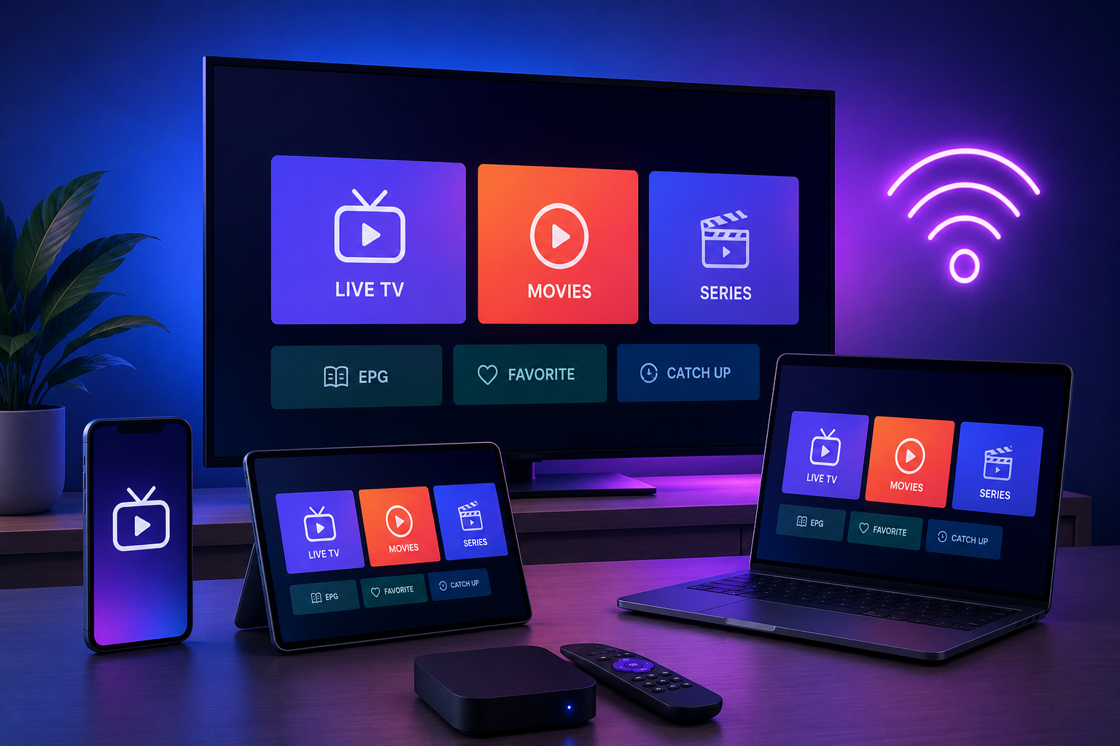
Step-by-Step: How to Set Up IPTV TV and Stop Buffering
The diagram above shows the basic path of an IPTV stream. The goal is to make that path as stable as possible. Follow these steps in order before you blame the provider or the app.
Step 1: Test Your Internet Connection First
Run a speed test on the exact device you want to use. A stable 25 Mbps connection is enough for most HD streams; a 4K stream may need more. Speed is less important than stability. If you see large fluctuations, or if the buffering happens only in the evening, your network likely needs attention.
Step 2: Buy or Test a Stable IPTV Service
The smartest way to buy an IPTV subscription is to start with a 24-hour or 48-hour trial. Do not prepay for a year until you have tested the service during peak hours, especially if you watch live sports. Where to buy IPTV subscription safely means using a seller who offers a trial, has clear payment terms, and responds before you pay.
If you want fully legal options, YouTube TV, Hulu Live, Sling, and Fubo are legitimate IPTV providers for USA channels. They cost more than gray-market panels, but they offer the most reliable experience.
Step 3: Install the Right App on Firestick or Smart TV
For a Firestick, use the Downloader app to install TiviMate or IPTV Smarters. Avoid random free players that have not been updated. For Samsung or LG smart TVs, the process for how to set up IPTV on smart tv usually involves installing IBO Player or Smart IPTV, noting the MAC or device ID, and sending it to your provider to activate the playlist.
On Android TV or Google TV, TiviMate is the most reliable player for live channels. On Apple TV, try IPTVX or Smarters. The best IPTV service for Firestick is not necessarily one with the most channels; it is one that works with TiviMate and stays stable during the hours you watch.
Step 4: Optimize Your Wi-Fi or Use Ethernet
If you are on 2.4 GHz Wi-Fi, switch to 5 GHz. The 5 GHz band is faster and less crowded, but it has shorter range. Better yet, connect your Firestick or smart TV directly to the router with an Ethernet adapter. A wired connection removes most Wi-Fi interference.
Move the router away from thick walls, microwaves, and large metal objects. If you cannot use Ethernet, place the router in the same room as the streaming device.
Step 5: Configure the Player Settings
In TiviMate, open Settings, then Playback. Set the buffer size to large or very large if your device has enough memory. Disable timeshift if you do not need it. For some streams, switching from MPEG-TS to HLS can reduce buffering, but this depends on the provider.
Step 6: Use a VPN Only When It Helps
A VPN can help if your internet service provider is throttling IPTV traffic or if the service is geo-blocked. But a VPN also adds latency. Test your stream with the VPN on and off. If it buffers more with the VPN, turn it off. Use the VPN only when it solves a specific problem.
Step 7: Test on a Second Device
If the same service works on your phone but buffers on your Firestick, the problem is your home network or the Firestick's Wi-Fi. If it buffers on every device, the provider's server is likely overloaded. That is when you should consider a different IPTV service or a VPN route.
Realistic Results After Fixing Your IPTV Setup
With a stable provider and a wired or strong 5 GHz connection, you can expect smooth 1080p or 720p live channels. Sports may have a slight delay compared to cable or satellite. Occasional buffering during peak hours is still possible, but it should be rare.
Channel lists change. Some channels from a provider's iptv channels list usa may stop working for a day and then return. EPG guides are not always perfect. These are normal IPTV quirks. If you expect 100% uptime and instant channel switching, IPTV TV may not be the right fit.
Experienced users keep a backup service or legal streaming app available for must-see events. That way a buffering episode does not ruin a game or a season finale.
Pitfalls to Avoid When Choosing an IPTV Provider
Avoid lifetime deals that look too cheap. Avoid sellers who only communicate through Telegram or WhatsApp and disappear after payment. Avoid services with 20,000 channels but no working EPG. Avoid auto-renewal plans you cannot cancel easily.
Reading iptv review reddit can help, but many posts are affiliate spam. Look for repeated complaints about buffering, missing channels, or disappearing service. A long thread with real user reports is more useful than one-sentence praise.
Also remember that legality matters. Some IPTV providers hold licenses for the channels they stream. Others do not. If you are in the USA, using a fully legal provider protects you from sudden shutdowns and potential legal risk.
What Works vs What Does Not
Quick Tip: Before committing to any IPTV provider, request a trial during your normal viewing hours. A service that buffers at 9 p.m. will keep buffering at 9 p.m. unless you change your network or provider.
The comparison above matters because not all IPTV services use the same server quality. One provider may look identical to another in a sales pitch, but the difference appears at high-traffic hours. Test during the evening, weekends, or a live sports event before you commit.
If you have worked through the network fixes and the service still buffers on every device, the provider is likely the problem. In that case, move on quickly. There are plenty of IPTV services that offer trials, and the right one will feel stable without constant tinkering.
Featured Streaming Selection:
Check Out what is iptv tv Deals →Affiliate Disclosure: Clicking this secure link verified by our network supports our team through standard partnership terms at zero extra cost to your invoice.
Frequently Asked Questions
This article contains affiliate links. Our editorial analysis remains independent.